Events

  • Events

    Online events in juni

    Zaterdag 5 juni

    Museumnacht Leiden Online
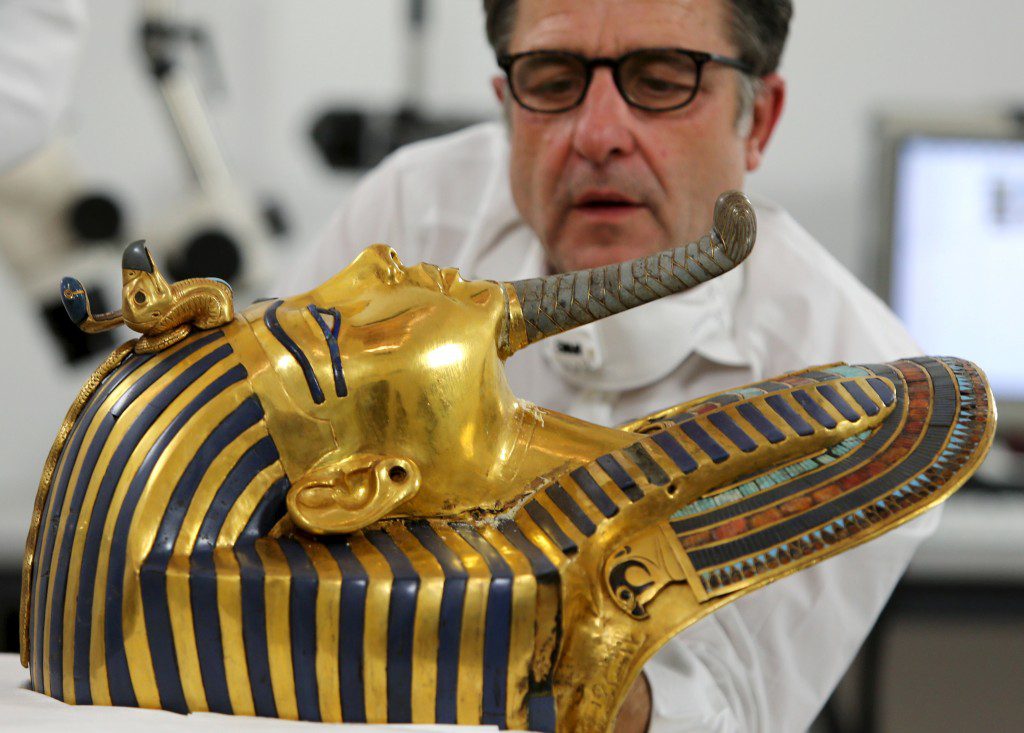
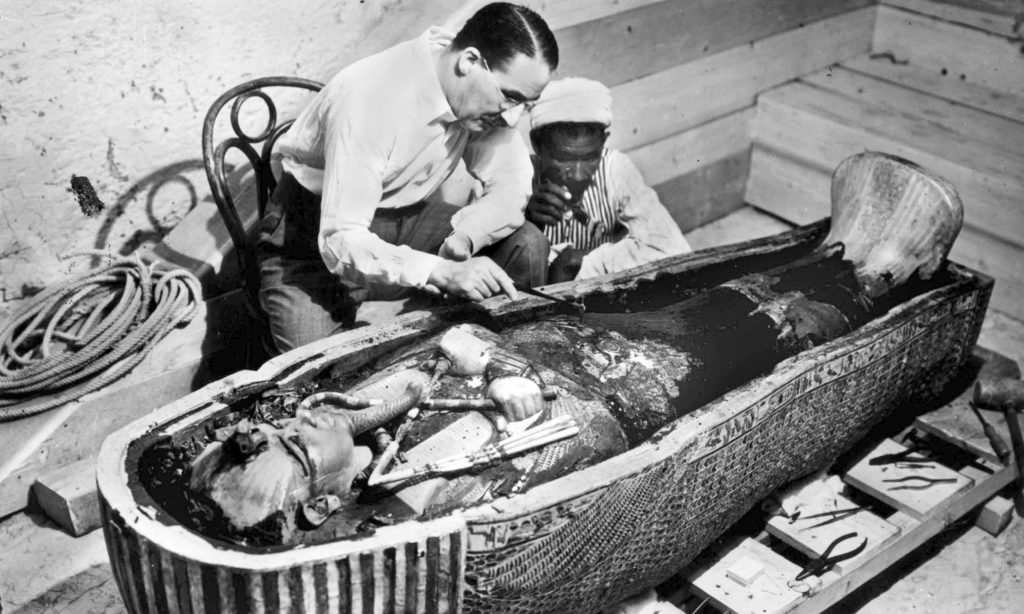
    met o.a. Op zoek naar Toetanchamon in het Rijksmuseum van Oudheden

    Kosten: €5

    Tickets

    Zondag 6 juni, 19.00 uur

    Bes-like figures in the ancient Egyptian Book of the Dead
    Dr. Rita Lucarelli

    Bes was a popular god in ancient Egypt and he still is today. Less known are instead some apotropaic Bes-like figures occurring in the vignettes of spells belonging to the corpus of the Book of the Dead, especially on papyrus, and which play the function of demonic guardians of the netherworld. In this lecture, these figures will be analyzed and discussed in order to understand their (benevolent or malevolent) agency within the heterogeneous divine and demonic population of the Realm of the Dead.

    Registreren

    Maandag 7 juni, 18.15 uur

    Musik: ein fast unsichtbares Fundament der altägyptischen Kultur
    Prof. Dr. John Baines (Oxford)

    Musik und Tanz sind integrale Bestandteile des Menschseins. Das galt für die Alten Ägypter wie für uns heute. In Ägypten war Musik unverzichtbarer Bestandteil bei Festen, Riten und beim Militär: In verschiedenen Epochen übernahmen Hofleute die Rolle von Musikern, Werke der Literatur wurden musikalisch aufgeführt. Durch Musik konnten Ideen und Emotionen ausgedrückt werden, die sonst fast nicht öffentlich ausgesprochen wurden. Trotz ihrer Bedeutung wird die Musik relativ wenig von Ägyptologen berücksichtigt. Der Klang der ägyptischen Musik mag fast unerreichbar sein, aber reiche Quellen bieten einen Zugang zum musikalischen Leben.

    Meer informatie

    Dinsdag 8 juni, 17.15 uur

    Bes in Bahariya
    Françoise Labrique (University of Cologne / Université libre de Bruxelles)

    From the XXVIth dynasty to the Period of the Roman Empire, monumental remains in the Bahariya-oasis, despite their bad state, show the prestige of the god Bes as a warrior, a musician, a protector, an atlant. Was he the object of a specific cult? After a synthesis of the archaeological finds of these last years, we will try to define his theological role.

    Registreren

    Dinsdag 8 juni, 18.00 uur

    From the Museum back to the tomb: the virtual rejoining of a sarcophagus and its burial in 26th dynasty Saqqara
    Rita Lucarelli

    The Late Period inner sarcophagus of “chief physician” and “overseer of the Temehu (Libyan mercenaries)” Psamtek, found in 1900 in Psamtek’s tomb south of the Unas pyramid at Saqqara, is now on public display in the Phoebe A. Hearst Museum of Anthropology in Berkeley, California (PAHMA 5-522). Like many museum objects, its modern display cannot adequately replicate aspects of its original archaeological context — in a deep rock-cut shaft, nestled among hundreds of impressive elite tombs at the necropolis.

    In order to virtually re-place the sarcophagus in its original context, a joint team from the University of California, Berkeley and Santa Cruz, is developing a dynamic VR-headset experience that combines a 3D reconstruction model of Saqqara with a photogrammetric model of the sarcophagus. In this presentation, I will provide a demo of the VR headset application (under development), present the “Book of the Dead in 3D project”, aiming at building a database of annotated 3D coffins as the one of Psamtek, and describe the technological and intellectual challenges of combining multiple types of data in the application.

    Facebook Live event

    Woensdag 9 juni, 18.00 uur

    Museums in Egypt: past, present, future
    Salima Ikram (Cairo)

    Zoom link

    11-12 juni

    Online workshop: Researching the History of Egyptology

    Kosten: £10

    Many themes have dominated research into the history of Egyptology including the Napoleonic Description de l’Egypte, the decipherment of hieroglyphs, and the explorations of early travellers. But increasingly, broader themes relating to the history of Egyptology are being discussed including the influence of political conditions on the development of early Egyptology in the 19th century, and the work of the first Egyptologists as seen in their original archives.

    Registreren

    Dinsdag 15 juni, 19.30 uur

    Het linnen van de farao’s: de textielcollectie van Alfred Wiedemann in Brussel en Leiden
    Veerle van Kersen MA (KU Leuven)

    Kosten: gratis voor donateurs en studenten, €5 voor niet-donateurs

    Linnen vervulde millennia lang een belangrijke rol in de Egyptische samenleving. Naast het gebruik in het dagelijks leven was het ook een onmisbaar element bij religieuze en funeraire praktijken, zoals het mummificatieritueel. Tot voor kort zagen de meeste egyptologen mummiewindsels echter als onbelangrijk, en niet de moeite om te bewaren. Veel funerair textiel werd zo weggegooid, of in stukjes geknipt en verhandeld als souvenir.

    De Duitse egyptoloog Alfred Wiedemann verzamelde deze stukjes textiel, en schonk rond 1900 een deel van zijn collectie aan de musea in Brussel en Leiden. In deze lezing zullen we de herkomst van deze fragmenten nader bekijken, en onderzoeken hoe ze door de antiquiteitenhandel in Europa zijn beland. Daarnaast bespreken we ook de resultaten van een technische analyse van deze fragmenten. De informatie verweven in dit textiel geeft ons namelijk nieuwe inzichten over de evolutie van textieltechnologie in Egypte.

    Registreren

    Donderdag 17 juni, 18.00 uur

    The Museo Egizio’s current research at Deir el-Medina
    Dr Cedric Gobeil

    Within the framework of the French Archaeological mission at Deir El-Medina carried by the IFAO, the Museo Egizio of Turin is conducting research on a few Ramesside tombs located in the Western necropolis. These tombs have been chosen based on the many artifacts that belonged to the owners of these tombs and are now kept in the museum. In addition to giving the opportunity to perform a study on these fragile structures using new technologies, this fieldwork is a unique chance to recontextualize many objects of the museum’s collection by shedding a new and fresh light on them. During this talk, viewers will have the chance to get a first glimpse at this work in progress.

    Facebook Live (link to be posted)

    Donderdag 17 juni, 19.00 uur

    Hatshepsut and the Temple of Mut
    Prof. Betsy Bryan

    By 1470 B.C.E., Hatshepsut emerged as King, technically reigning alongside her stepson and nephew Thutmose III. As he was still a youth, Hatshepsut dominated their coregency. As ruler she constructed numerous edifices honoring the great gods of Thebes, Amun, and Mut. For Mut, she rebuilt the temple and renewed festival rites involving sacred drunkenness. Hatshepsut’s devotion to the Mut Temple connects her to Karnak, Luxor, and her glorious Deir el Bahri across the Nile.

    Registreren

    Zaterdag 19 juni

    Sudan Day 2021

    Registreer uiterlijk 18 juni via Sudantag-Berlin-2021@dainst.de

    Zaterdag 19 juni, 15.30 uur

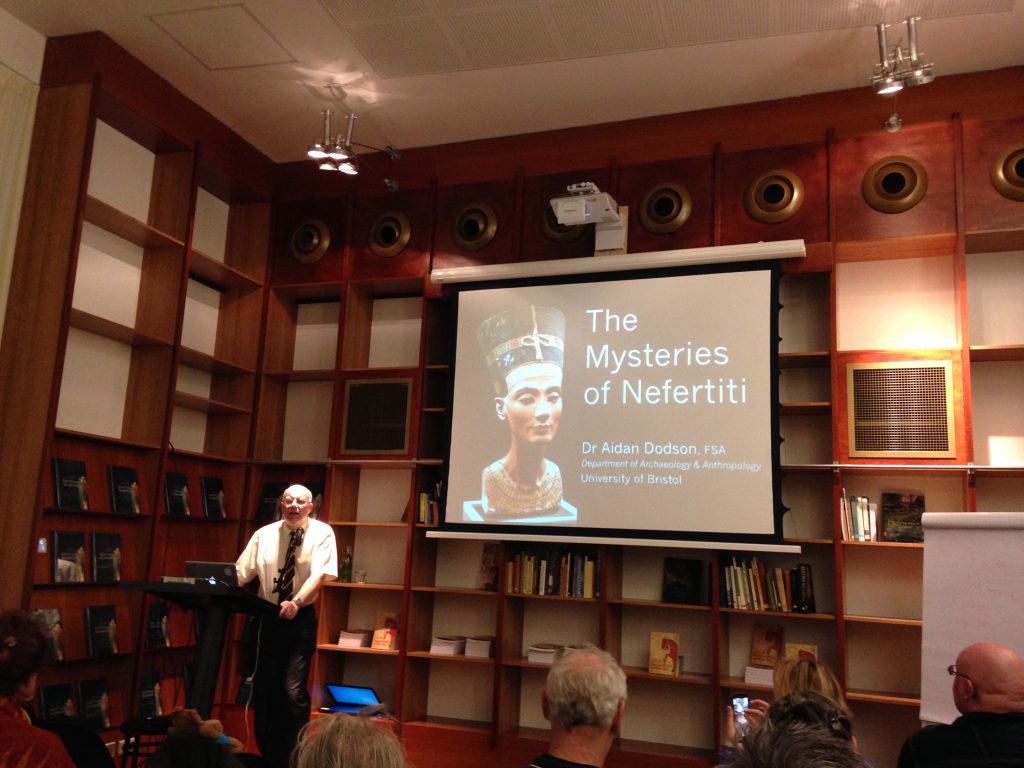
    The Funerary Monuments of Hatshepsut and Senenmut
    Prof. Aidan Dodson

    Kosten: £5

    Hatshepsut’s reign marked an important horizon in the development of Egyptian royal funerary arrangements, with the definitive adoption of the Valley of the Kings as the kingly cemetery, and the first ‘mature’ royal memorial temple. In the private sphere, the funerary arrangements of her close associate Senenmut show important features, some of which are seemingly unique for a private person. This afternoon we will therefore explore their monuments and what they tell us about not only Egyptian funerary archaeology, but also what they may say about the much-debated nature of the their personal relationship.

    Meer info

    Zaterdag 19 juni, 19.00 uur

    The History and conservation of Khonsu Temple
    Dr. Nicholas Warner

    In 2020, ARCE prioritized completing the conservation of this significant Pharaonic monument starting in the fall of 2021 with complete documentation using 3D laser scanning. The work is scheduled to continue for at least four years. It will initially focus on exterior structural repairs and consolidation, followed by conserving the remaining un-treated polychrome painted surfaces within the temple and further training for local conservators and site managers.

    Registreren

    Dinsdag 22 juni, 12.00 uur

    The EES Amara West excavations
    Dr Tomomi Fushiya

    Archaeological practice is not isolated from society. Relationships are forged in reflection of the time. Led by Herbert W. Fairman, the EES expedition conducted the first systematic excavation of Amara West from 1938, during the Anglo-Egyptian Condominium period. This lecture looks at the relationship of the EES team, Quftis brought from Egypt, and local Nubian communities – all of whom were involved in the Amara West excavation – based on study of archival records in the EES Lucy Gura Archive, and memories of former Sudanese workers who still live around the site which I recorded during fieldwork with the British Museum’s Amara West Research Project (2015-2018).

    Registreren

    Dinsdag 22 juni, 20.00 uur

    De Belgische opgravingen in de rotsnecropool van Elkab (1986-1999)
    Stan Hendrickx (UHasselt/PXL-MAD)

    Kosten: €4

    Tussen 1986 en 1999 onderzocht het Comité voor Belgische Opgravingen in Egypte een aantal rotsgraven uit het late Oude Rijk in de rotsnecropool te Elkab. De graven bevinden zich in het Noordwestelijke deel van de necropool, in het zicht van het woongebied aan de rand van de Nijl. Van uitzonderlijk belang is het feit dat sommige graven in rechtstreeks verband kunnen gebracht worden met inscripties in de Wadi Hellal, drie kilometer verder in de woestijn. De teksten verwijzen naar priesters van Nekhbet: minstens twee graven behoorden aan deze priesters toe, waaronder dat van “Sawikai” (sA-w(i)k(A=i), het enige graf dat ook gedecoreerd werd. Daarnaast werd bovenop de heuvel met de rotsgraven ook een mastaba uit de 3de dynastie opgegraven. Dit uitzonderlijke monument wijst op het grote belang van Elkab gedurende het vroege Oude Rijk.

    Registreren

    Zaterdag 26 juni, 21.00 uur

    From the Nile to the Mississippi: Ancient Nubia at the Saint Louis Art Museum
    Dr. Denise Doxey

    Nubia: Treasures of Ancient Africa, now on view at the Saint Louis Art Museum, explores the powerful but enigmatic kingdoms of ancient Nubia through their artistic achievements, including magnificent jewelry, pottery, sculpture, metalwork, and more. Drawn entirely from the collection of the Museum of Fine Arts, Boston, it focuses on the sites of Kerma, Napata, and Meroe, spanning some 2,000 years, from about 1700 BCE into the fourth century CE.

    Through Nubian art, the exhibition also examines concepts of power, representation, and cultural bias in the ancient world, in the early 20th century, and today. Join guest curator Dr. Denise Doxey for a virtual tour of the exhibition and a discussion of the behind-the-scenes process of developing it.

    Registreren

    Dinsdag 29 juni, 18.00 uur

    Dahshur before Snefru: The pre-pyramid cultural landscape of Dahshur
    Lea Rees (Freie Universität Berlin/University of Cambridge)

    The pyramid site of Dahshur is traditionally associated with the pyramids built by king Snefru, the founder of the 4th Dynasty. Popular as well as scientific literature often give the impression that the pyramids of the Old Kingdom were built on ‘virgin ground’, untouched by human activity before the rulers decided to erect their monuments at this very location. But in fact, all of the pyramid sites of the Memphite necropolis had already served as an elite burial ground in Pre- and Early Dynastic times. Only at Dahshur such early material seemed to be missing. However, a re-evaluation of excavations carried out in the late 19th century as well as archaeological discoveries of the last 30 years make it possible to draw a provisional picture of the pre-pyramid cultural landscape of Dahshur.

    Zoom link

  • Events

    Online lezingen in mei

    Dinsdag 4 mei

    Dr. Mary Ann Marazzi
    Ished tree scenes in ancient Egypt

    Evidence for ished tree scenes date from the reigns of Thutmosis I through that of the Roman ruler Hadrian. They appeared in both texts and images on temple walls and other monuments including obelisks, stelae, and statuary, but until recently they were not understood that well and were not collected and analysed as a unit. This presentation gives an overview of what an ished tree scene is and the function it had in ancient Egypt including a possible sequence of events for the ritual of the ished tree as well as who could see the images and read the texts.

    Registreren

    4-6 mei

    The Egyptological Conference in Copenhagen 2021

    The theme of this year’s conference is trade and administration in Ancient Egypt, however, the presentations will cover a variety of topics within the field of Egyptology and archaeology.

    Meer informatie

    Zaterdag 8 mei

    Rosalind Janssen, Janet Johnstone & Elizabeth Clancy
    Early Fashion and Textiles by the Nile, Euphrates and Tigris: Conversations

    This panel brings together scholars and practitioners who will introduce their studies of and encounters with ancient textiles, clothes, and fashion. Exploring practical textile and dress making techniques of the cultures along the Nile, Euphrates and Tigris rivers during the 3rd millennium BCE, they ask: How was fashion used to express cultural, societal, and personal identities? Find out how ancient fashion and clothes making techniques can influence the way we make, design, and wear textiles today.

    Registreren

    Zaterdag 8 mei

    Kelsey Museum
    Animals in the Ancient World

    Animals abound in the art and artifacts of the ancient Near East, Greece, Egypt, and Rome. On this guided tour, learn more about different aspects of animals in antiquity. We’ll take a look at animal-themed artifacts in the Kelsey and ask: Was that animal food? A laborer? A pet? A sacrificial victim? We’ll also discuss what kinds of animals were symbols of power and strength, and the meanings different animals had in the ancient world.

    Meer informatie

    Zondag 9 mei

    Dr. Daniel Soliman
    Topstukkenlezing over de tempel van Taffeh

    De tempel van Taffeh, die in de grote entreehal van het Rijksmuseum van Oudheden staat, werd in de 1ste eeuw na Chr. gebouwd in Taphis, een stad in het diepe zuiden van Egypte. Twee millennia later schonk de Egyptische overheid de tempel aan het Nederlandse volk. Deze lezing gaat over de lange geschiedenis van de tempel en de verschillende manieren waarop het gebouw door de eeuwen heen een bijzondere plek is geweest. Daniel Solimans verhaal neemt u mee op een reis door de tijd: van de Romeinse periode, via de laatantieke periode, de middeleeuwen, en de tweede helft van de vorige eeuw, naar de dag van vandaag.

    Meer informatie

    Zondag 9 mei

    Dr. Mariam Ayad
    The God’s Wives of Amun

    Kosten: £4

    Since its inception at the beginning of the 18th dynasty, the office of the God’s Wife of Amun was closely associated with the priesthood. By the time the office reached its zenith in the 23-26th dynasty, that association became immortalized in the iconography of the God’s Wife’s small Osirian chapels at Karnak. This illustrated lecture focuses on the priestly duties of the God’s Wife and what might those scenes tell us about her status and role more broadly.

    Meer informatie

    Dinsdag 11 mei

    Manon Schutz
    Sleeping on the goddess’ back. The meaning of beds in ancient Egypt

    Kosten: gratis voor donateurs en studenten, €5 voor niet-donateurs
    Voertaal: Engels

    In deze lezing vertelt Manon Schutz ons in detail over de functie van bedden in het oude Egypte. Na een algemene inleiding en een definitie van het concept ‘bed’, worden het gebruik en de religieuze betekenis van dit meubelstuk besproken voor verschillende stadia van zijn lange geschiedenis. De nadruk zal vooral liggen op de funeraire sfeer, aangezien de meeste overgeleverde bedden afkomstig zijn uit graven. Daarnaast zal ook het gebruik van bedden in de dagelijkse praktijk worden besproken.

    Registreren

    Woensdag 12 mei

    Two lectures by MA students at Swansea University
    Wig Snatched: Unveiling the process behind wig-making and the wig industry in ancient Egypt / From rats to robber flies: active pest control in ancient Egypt

    Registreren

    Zaterdag 15 mei

    Dr. Chris Naunton
    The Amarna Blessed Dead

    Kosten: £5

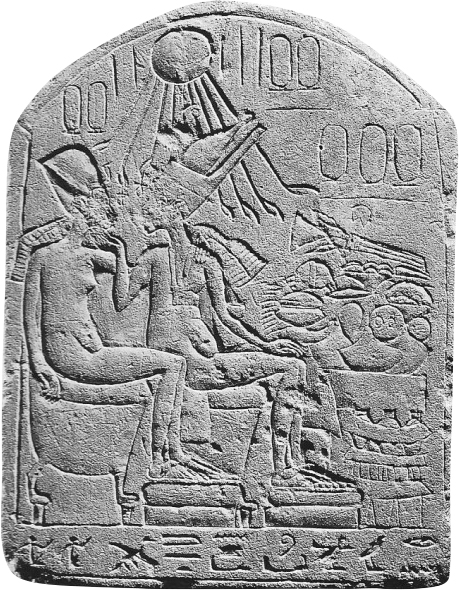
    What happened after Akhenaten’s death? Where was he buried? Who succeeded him? We know that Tutankhamun’s reign saw the end of Akhenaten’s revolution and the restoration of the old ways, and the boy-king himself was the last of the family line. But it seems clear that there was at least one other pharaoh in between Akhenaten and Tutankhamun. Who were they? Could it have been Nefertiti? And who was Smenkhkare? Tantalising clues have been in tombs at Amarna and in the Valley of Kings. But how to make sense of them?

    Registreren

    Woensdag 19 mei

    Daniela Rosenow & Matthieu Götz
    Dahschur – Recent Research in the Old Kingdom Settlement

    Dahshur is one of the most important royal pyramid cemeteries of Ancient Egypt. The first part of this lecture will highlight one of the most recent discoveries, a new settlement most likely inhabited by the people who planned the pyramids. The second part will explore the application of latest technologies, benefiting archaeology, conservation and site managenment.

    Registreren

    Woensdag 19 mei

    Dr. Kucera (Qasr Dakhleh Project)
    Archaeological investigations at al-Qasr and the Roman fort of Dakhleh Oasis

    For several years after the discovery of Greek documents at Kellis (Ismant al-Kharab), which revealed the existence of a Roman military camp (castrum) in the 4th century CE in Dakhleh Oasis, the location of a fort remained elusive for researchers. Between 2006 and 2007, a possible location for the fort was realised when the remains of substantially large walls and unusual structural features were observed at the Islamic settlement al-Qasr. This talk presents the results of surveys and excavations that lead to the identification of the fort, further discoveries related to the occupation of the site, and a review of the findings in light of the Roman military presence in the Western Desert.

    Meer informatie

    Woensdag 19 mei

    John C. Darnell (Yale University)
    Setting a seal upon the desert: Protodynastic and Early Dynastyc augmentation and interpretation of Predynastic rock art in the Upper Egyptian desert

    Registreren via gaelle.chantrain@yale.edu

    Donderdag 20 mei

    Cédric Gobeil (Museo Egizio, Turin)
    In the footsteps of Ernesto Schiaparelli. The Museo Egizio’s current research at Deir El-Medina

    Within the framework of the French Archaeological mission at Deir El-Medina carried by the IFAO, the Museo Egizio of Turin is conducting research on a few Ramesside tombs located in the Western necropolis. These tombs have been chosen based on the many artifacts that belonged to the owners of these tombs and are now kept in the museum. In addition to giving the opportunity to perform a study on these fragile structures using new technologies, this fieldwork is a unique chance to recontextualize many objects of the museum’s collection by shedding a new and fresh light on them. This talk will be the opportunity to get a first glimpse at this work in progress.

    Registreren

    Donderdag 20 mei

    Prof. Dr. Jochem Kahl
    Wo Myrrhe nicht mehr regnen und Weihrauch nicht mehr tropfen kann – Die verschollenen Tempel von Assiut

    Info en Zoom link

    Donderdag 20 mei

    The Egypt Centre Curator’s Chats
    Ancient Egyptian Textiles

    Using items within the museum’s own collection as well as examples from elsewhere, we will discuss the importance of textiles in Ancient Egypt. We shall briefly explore textiles used for the preparation of death including a rare painted shroud dating back over 3000 years, and consider theories as to how the ancients were able to pleat their garments. We will also look at the “Coptic” textiles in the museum including some which are said to have been designed with the intent of tricking the evil eye.

    Registreren

    Vrijdag 21 mei

    7th Annual Birmingham Egyptology Symposium
    Biography in ancient Egypt

    Registreren

    Zaterdag 29 mei

    Dr. Mennat-Allah El Dorry
    Egyptian History and its Many Cuisines: An Exploration of Egyptian Food History

    What is Egyptian cuisine? It is an amalgamation of thousands of years of culinary innovations, technological developments, and new crops and flavors. Egyptian cuisine(s) change(s) from one region to the next, and from one time period to another. This talk will explore the cuisines of each phase of Egyptian history, identifying some of the highlights or developments of each time period, starting with ancient Egypt and through to the 20th century. It will also investigate the transformations, and how these may or may not have had an impact on the face of today’s Egyptian food. The paper will also survey the different sources that scholars have available in order to study the history of Egyptian cuisine.

    Registreren

    Zondag 30 mei

    Dr. Joanne Backhouse
    Women of Deir el-Medina

    Kosten: £5

    Deir el-Medina housed the craftsmen who created the royal tombs during the New Kingdom. We often consider the lives of the workmen but less so the female residents. Examining predominantly figured and hieratic ostraca, female figurines, stela, and tomb scenes this talk attempts to shed light onto the daily lives of the female inhabitants. Their religious practices and afterlife expectations will also be considered.

    Registreren